Voices

Sharing stories and experiences that highlight diverse narratives across community groups.

Community Voices

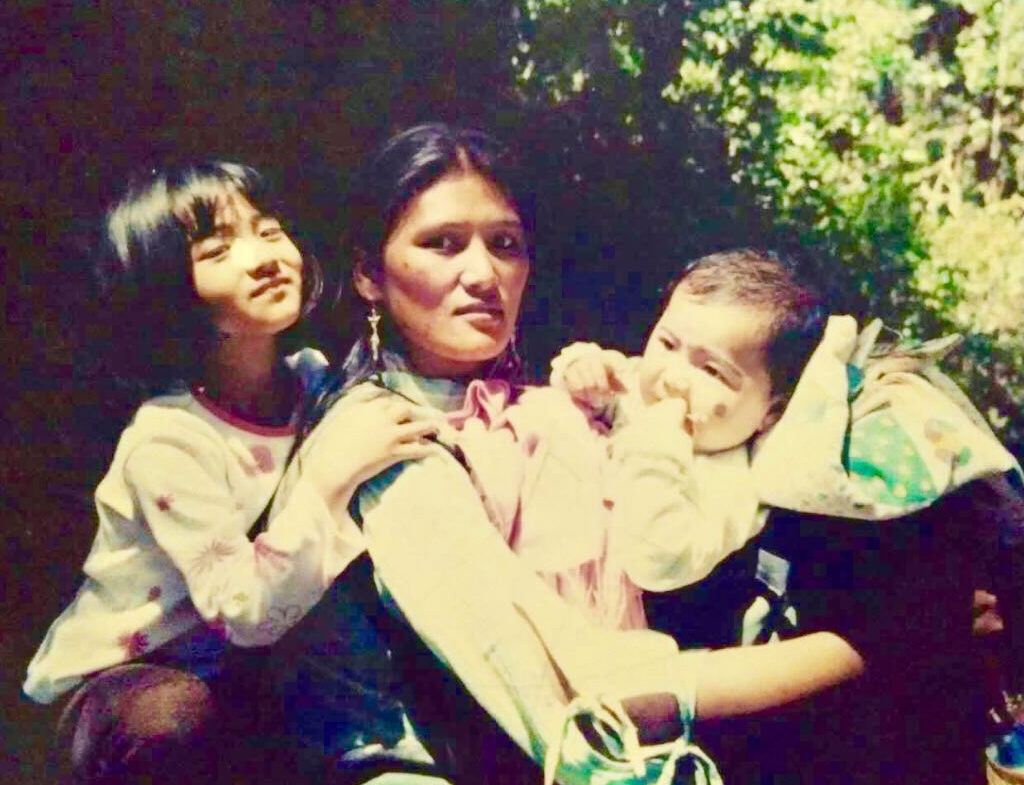
A mother holds her baby daughter in her arms, her older daughter hugs her from behind.
Tenzin with their mother and sister.
From DIGITIZE (by Tenzin Lodoe) – A fun fact about me is that my sister and I share the same first name. We share this name with monks who came before and after us. We share this name with our cousins and our fellow Tibetans.

With just my name I could share with you the stories of the countless Tenzins who have embarked on a significant trajectory in the Free Tibet Movement.

From DIGITIZE (by Mateo Acuña) – On the first day of my History of Peru class, my professor passed out color pictures of a Spanish colonial era painting done in Peru. He told us that the image would no doubt appear baffling, but to get into small groups and generate theories about what it could mean.
A mother, father, and son wearing winter coats drink tea from a thermos at a picnic table by the beach.
A photo taken by Sonam of her family.
From DIGITIZE (by Sonam Sherpa) – I live a good life, a life that some might envy. I have never struggled with anything—my parents made sure that I wouldn’t have to. My biggest concerns most days are studying for exams or deciding what to do with my free time. My life has been smooth sailing—no currents, no tides, no waves.

The same cannot be said of my parents.
A woman in a matching hat and shirt stands on the beach smiling at the camera.
Courtesy of Brenda Rodriguez
From DIGITIZE (by Brenda Rodriguez) – Curanderos in my household are known as healers. My family opened me up to people with this gift. It wasn’t until I became older that I realized the concept wasn’t as familiar to the world around me.
From DIGITIZE (by Lilian) – It’s the 23rd of December and the kitchen is packed. The island in the middle of the kitchen is filled with plates of dirty utensils, raw meat, kneaded dough, and spices. The sound of the water faucet running in the kitchen, the loud music being played from the speaker, and the joyous laughter coming from the kids overwhelms the neighbors.
From DIGITIZE (by Aziya) – As my mother always says “Ninkii reerkiisa xasuusta, raad ma lumiyo” which translates to, ‘One who remembers their roots will never lose their way.’
From DIGITIZE (by Seybane) – “Fatima,” Amina began hesitantly, “what does it mean to be Black and Muslim in America? I’ve been wondering about how our family’s story fits into something so vast.”

Fatima smiled knowingly, setting her cup down. “That’s a big question, little sister. But let’s start with the beginning — our roots.”
From DIGITIZE (by Bilal) – I have always wondered about the meaning of the stories of my culture. I have always had a strong desire to understand their importance and why they were so significant to talk about. These folktales scared me as a kid, but also created a curiosity in me. As I remembered those stories I started to understand that even though they used to scare me as a kid, they also guided me and helped me navigate the world and that’s how important my cultural stories are to me.
From DIGITIZE (by Khadija) – How did people in Somalia dress, and how did the way they dressed change over time? Let’s start from the beginning.
A man applies paint to the face of a daruma doll.
Momo Angela Ohta
From Ambush (by Mio Koumura) – The traditional Japanese Daruma doll dates back hundreds of years, and represents luck and fortune especially as we prepare to ring in the new year.

Explore

Share your Feedback!

We’d love to hear from you! voices@echox.org